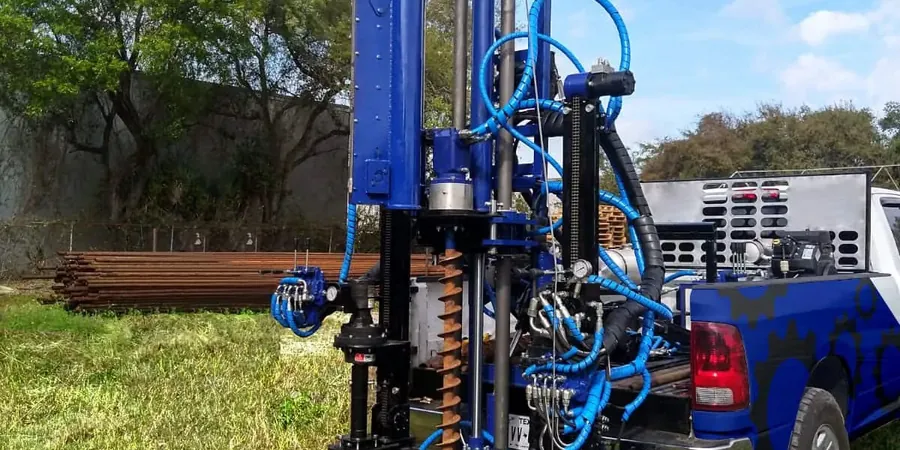
In Burlington, the geotechnical story is rarely simple. You might hit dense Halton till on one lot and fractured Queenston shale on the next. That's why ASTM D1586-18 remains the backbone of our subsurface investigations here. The Standard Penetration Test gives us N-values that we can correlate directly to the local stratigraphy—something that matters a lot when the underlying rock dips toward Lake Ontario. We run the split-spoon sampler with a 140 lb hammer dropping 30 inches, counting blows for each 6-inch increment, and the resulting N60 tells us whether we're dealing with a stiff clay that can handle a spread footing or a loose silt that demands over-excavation. For sites near the escarpment, where groundwater can be perched unexpectedly, we often pair this with an in-situ permeability test to nail down drainage behavior before construction starts.
Burlington's N-values tell a story of ice, lake, and rock—understanding the local drift thickness is what separates a reliable foundation design from a future claim.