GEOTECHNICALENGINEERING
BURLINGTON
HomeRoadwayFlexible pavement design

Flexible Pavement Design and Geotechnical Analysis in Burlington, Ontario

Geotechnical engineering with regional judgment.

LEARN MORE

The distinctive rumble of a vibratory smooth-drum roller on fresh granular base is a sound we know well in Burlington. Our team specifies compaction patterns and lift thicknesses based on subgrade reaction, not guesswork. The city's lacustrine clays and shale bedrock along the Niagara Escarpment demand more than a standard cross-section. We tie pavement structure directly to CBR testing results from the first site visit, which tells us how the native soil will behave under repeated axle loads. Whether it's a new industrial cul-de-sac in Aldershot or a widened arterial near the QEW, we design the asphalt concrete and unbound layers to handle both traffic and Burlington's freeze-thaw cycles without premature rutting.

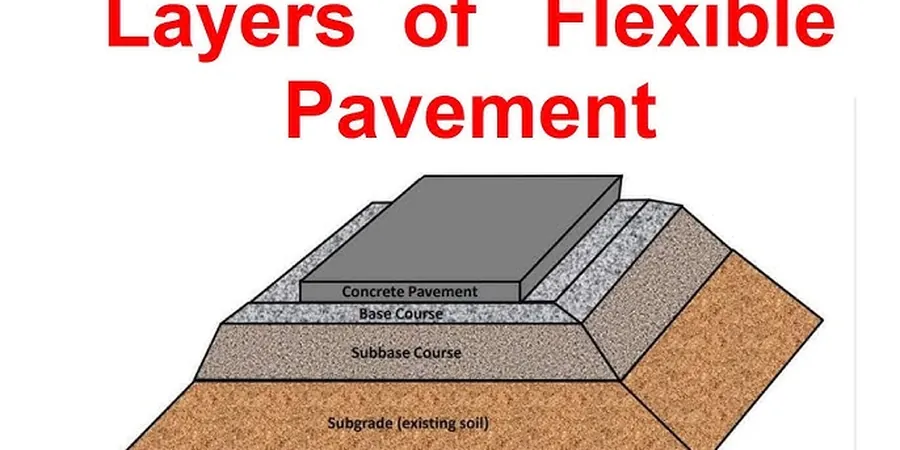
A properly designed flexible pavement on a weak Burlington subgrade distributes stress through the aggregate base, protecting the clay from shear failure under braking and turning loads.
Our service areas

Methodology and scope

Burlington's post-war expansion from a lakeside farming community into a suburban city of 186,000 left a patchwork of fill materials and buried topsoil across older neighborhoods. We regularly encounter compressible silty clays in the downtown and Plains Road corridors where the original creeks were filled in decades ago. This history matters because a pavement section that works on dense Halton till can fail quickly on reworked fill if the subgrade modulus is overestimated. Our flexible pavement design applies the AASHTO 1993 empirical method, then validates structural numbers with layered elastic analysis software that accounts for seasonal modulus variation. We also coordinate with in-situ density testing during construction to verify that each compacted lift achieves the specified target, because the best design means nothing without field quality control.
Flexible Pavement Design and Geotechnical Analysis in Burlington, Ontario
Technical reference — Burlington

Local considerations

The most common mistake we see local contractors make is placing asphalt directly on a proof-rolled subgrade without verifying moisture content. In Burlington's spring thaw, a saturated silt subgrade can lose over 60% of its CBR value in a single week. If the pavement structure wasn't designed for that worst-case spring condition, you'll see alligator cracking within two years. We insist on a detailed drainage analysis and often recommend raising the finished grade or installing subdrains along the pavement edge. Ignoring perched groundwater in the shallow overburden above the Queenston shale is a guaranteed path to premature failure, and it's entirely preventable with a proper flexible pavement design that considers both structural and hydraulic demands.

Need a geotechnical assessment?

Reply within 24h.

Email: contact@geotechnicalengineering.co

Applicable standards

AASHTO Guide for Design of Pavement Structures, 1993, ASTM D1883-21 (CBR of Laboratory-Compacted Soils), Ontario Provincial Standard Specification OPSS 310 (Granular Base), ASTM D1557-12 (Modified Proctor for Subgrade Compaction)

Technical parameters

ParameterTypical value
Design Traffic (ESALs)Up to 5 x 10⁶ for collector roads
Asphalt Concrete Thickness100–250 mm (4–10 in) depending on traffic class
Granular Base CourseGranular A, 150–300 mm compacted to 100% SPMDD
Granular SubbaseGranular B Type II, 200–450 mm where frost protection needed
Subgrade CBR Threshold> 3% without stabilization; < 3% requires treatment
Frost Depth Design1.2 m in Burlington (based on freezing index data)
Layer Coefficient (a₁)0.42 for conventional hot mix asphalt
Drainage Coefficient (mᵢ)1.0 for good drainage with edge drains

Frequently asked questions

What is the typical cost range for a flexible pavement design for a small commercial lot in Burlington?

For a standalone flexible pavement design report including subgrade investigation, CBR testing, and AASHTO 93 layer analysis, our fees typically range from CA$2,240 to CA$8,190 depending on lot size, traffic data complexity, and the number of borings required. A small plaza with standard loading docks falls on the lower end, while a larger distribution center with heavy truck lanes requires more extensive analysis.

How does Burlington's geology affect the required granular base thickness?

Burlington sits on glaciolacustrine clays and silts overlying shale bedrock, with the water table often within 2 meters of the surface in spring. These fine-grained soils lose stiffness when saturated, so we typically increase the granular subbase thickness by 100–150 mm compared to a well-drained sand site. The design must ensure the combined asphalt and base layers bridge any soft spots and provide adequate frost protection to the 1.2 m depth the Ontario Building Code references for this region.

Do you use the AASHTO 93 method or the mechanistic-empirical pavement design guide?

We primarily use the AASHTO 1993 empirical method for most municipal and commercial projects because it remains the standard referenced by Ontario municipalities and has a long validation history on local soils. For high-traffic arterial roads or special loading cases, we supplement this with mechanistic-empirical (M-E) analysis using software that models the actual stress-strain response of each layer under repeated axle loads, calibrated to local climate data from the Burlington area.

Location and service area

We serve projects across Burlington and its metropolitan area.

View larger map