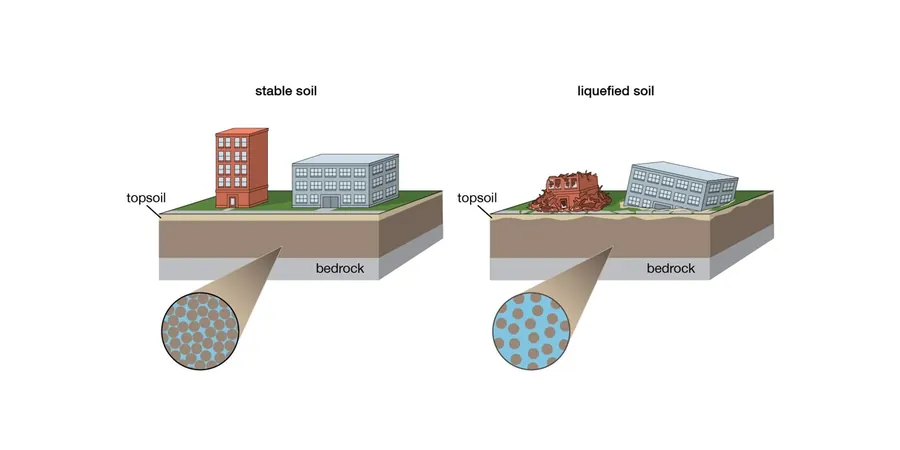
Burlington's rapid expansion along the Lake Ontario shoreline and the Niagara Escarpment has placed new infrastructure directly over complex glacial deposits. The 2015 flood mapping update underscored just how vulnerable saturated granular soils can be when ground shaking occurs. A soil liquefaction analysis in these conditions examines whether loose sands and silts below the water table will temporarily lose strength during a design earthquake. Our technical team draws on the NBCC 2020 seismic hazard values for the region, pairing them with site-specific penetration data. The goal is straightforward: determine the factor of safety against triggering and estimate any vertical settlement that could compromise foundations or buried utilities. In a city where the difference between a stable site and a problematic one often lies just a few meters of stratigraphy, skipping this step invites expensive surprises.
A fines content below 15% and a corrected SPT blow count under 15 are the classic red flags for liquefiable soil in Burlington's shoreline deposits.