GEOTECHNICALENGINEERING
BURLINGTON
HomeLaboratoryLaboratory CBR test

Laboratory CBR Testing in Burlington – ASTM D1883 & Ontario Pavement Standards

Geotechnical engineering with regional judgment.

LEARN MORE

Burlington pavement designs rely heavily on the California Bearing Ratio test. ASTM D1883 sets the procedure. Ontario’s wet-dry freeze-thaw cycles demand soaked CBR values, not just standard compaction data. We run specimens at our accredited lab using local subgrade samples from Aldershot clay to Tyandaga silt. The soaked test simulates spring-thaw conditions when road base saturation peaks. Without this data, pavement thickness calculations per the AASHTO 1993 Guide become guesswork.
Burlington engineers often pair CBR results with grain-size distribution to confirm fines content before selecting granular base course. This combination reduces over-design and keeps project costs within Halton Region infrastructure budgets.

A soaked CBR below 3% in Burlington subgrade means a granular base increase of at least 150 mm — we quantify that threshold daily.
Our service areas

Methodology and scope

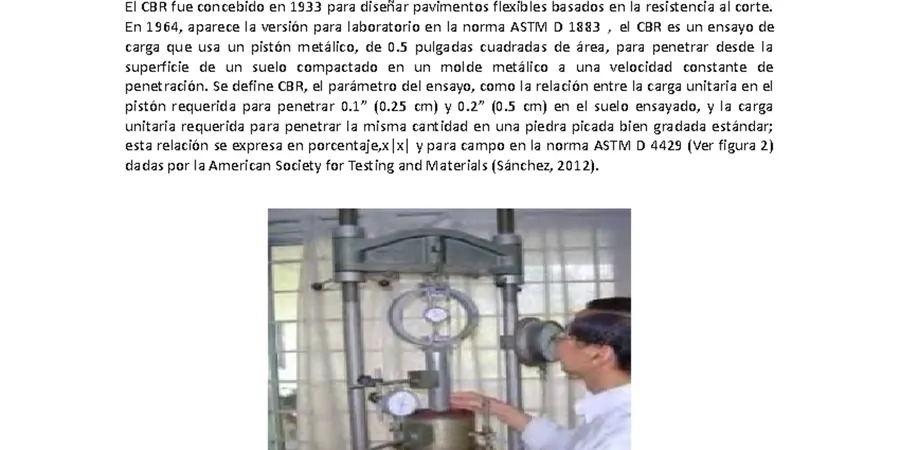
Our CBR lab setup uses a hydraulic loading frame with a 50 kN capacity and a penetration piston advancing at 1.27 mm per minute. Specimens are compacted in 152 mm diameter molds using a mechanical rammer calibrated to ASTM D698 or D1557 energy levels. We soak each specimen for 96 hours under a surcharge weight that matches the expected pavement structure. The load-penetration curve is plotted in real time. We extract CBR values at 2.54 mm and 5.08 mm penetration, reporting the higher ratio unless the curve requires correction for surface irregularities.
Burlington’s silty clay subgrades near Lake Ontario frequently show CBR values below 3% when soaked. That triggers the need for stabilization. We often recommend a proctor-tests companion run to verify maximum dry density before any lime or cement treatment specification. The correlation between compaction effort and CBR gain is not linear. We measure it directly.
Laboratory CBR Testing in Burlington – ASTM D1883 & Ontario Pavement Standards
Technical reference — Burlington

Local considerations

Subgrade conditions shift across Burlington neighborhoods. The Aldershot area sits on shale bedrock with thin overburden. CBR values there often exceed 10%, even soaked. Five kilometers east, near the QEW and Brant Street, lacustrine silty clays dominate. Those samples routinely drop below 3% CBR after soaking. Designing the same pavement cross-section for both zones without lab data is a failure waiting to happen.
Burlington’s freeze-thaw cycles amplify the difference. Poorly draining silts lose bearing capacity faster than the shale-derived soils. The Ontario Provincial Standard Specification (OPSS 1010) requires a minimum soaked CBR for granular base acceptance. We test both borrow pit material and subgrade to confirm compliance before aggregate delivery begins.

Need a geotechnical assessment?

Reply within 24h.

Email: contact@geotechnicalengineering.co

Applicable standards

ASTM D1883-21, ASTM D698-12, ASTM D1557-12e1, OPSS 1010 (Ontario Provincial Standard Specification), AASHTO T-193

Technical parameters

ParameterTypical value
StandardASTM D1883-21
Specimen diameter152.4 mm (6 in)
Compaction effortStandard (D698) or Modified (D1557)
Soaking period96 hours with surcharge weights
Penetration rate1.27 mm/min (0.05 in/min)
Swell measurementYes, during soak
Typical Burlington CBR range2% to 12% soaked
ReportingCBR at 2.54 and 5.08 mm

Frequently asked questions

What does a laboratory CBR test cost in Burlington?

A standard soaked CBR test in our Burlington lab runs between CA$170 and CA$310 per specimen, depending on compaction effort (standard vs modified) and whether a companion Proctor curve is required. Bulk pricing applies when three or more specimens are submitted from the same project.

How long does the CBR test take?

The full soaked CBR requires 96 hours of soaking plus one day for compaction and penetration. We typically deliver the final report within four business days. Unsoaked CBR results are available in 24 hours. Rush service can compress the timeline to 72 hours for soaked specimens if the lab schedule permits.

Can you test material brought from a Burlington construction site?

Yes. We test both disturbed bulk samples and remolded specimens. The lab needs about 25 kg of soil for one CBR specimen plus a companion Proctor. Samples must be delivered in sealed bags to preserve natural moisture. We can arrange pickup from sites across Halton Region, including Aldershot, downtown Burlington, and the corporate parks near Highway 407.

Location and service area

We serve projects across Burlington and its metropolitan area.

View larger map