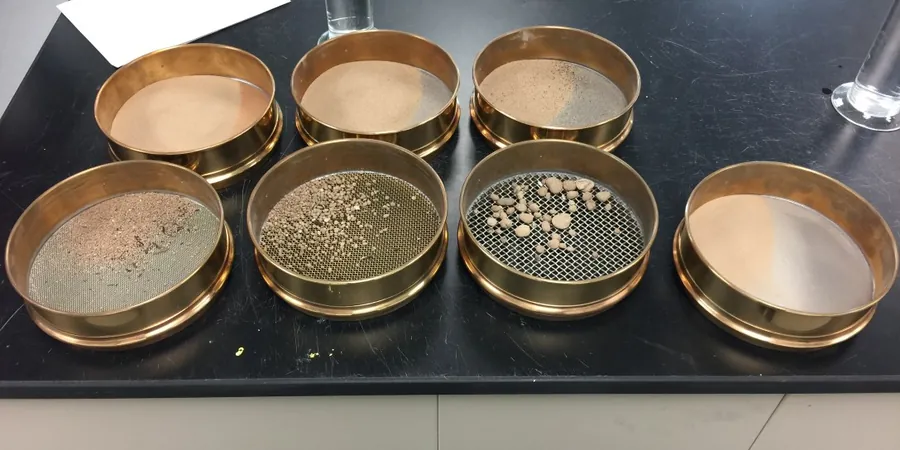
Burlington sits on the boundary of the Niagara Escarpment with overburden that shifts from silty clay till to sandy outwash in less than a hundred meters. That variability shows up in every grading plan we review. In our experience, contractors who skip a full grain size analysis on fill material end up with compaction problems that surface months later. The combined sieve and hydrometer method gives the complete curve—from gravel down to clay fraction—needed for USCS classification and for predicting how the material will behave under load. Whether the sample comes from a cut on Brant Street or a borehole near the lake, we run the hydrometer test alongside the sieve stack because Halton Till rarely tells the whole story with sieves alone.
A hydrometer curve is the only way to catch a gap-graded till that looks uniform in a sieve stack but will consolidate unevenly under load.