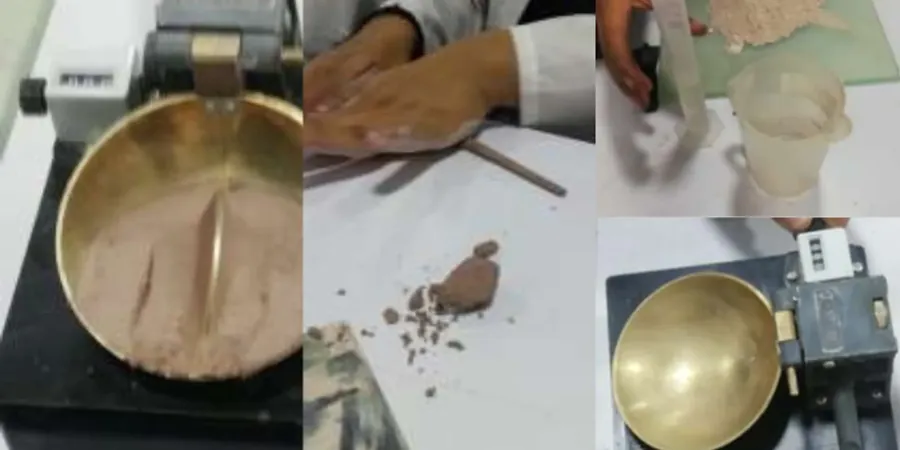
The Casagrande cup sits on a vibration-free bench inside our Burlington lab, its brass bowl calibrated to drop exactly 10 mm at 120 blows per minute. From the Escarpment clays near Tyandaga to the silty tills in Aldershot, this device defines the boundary between plastic and liquid behavior. We run every sample through ASTM D4318—17e1, pairing the mechanical liquid limit with a manual plastic limit thread rolled to 3.2 mm diameter. The difference between those two water contents gives the plasticity index that governs foundation design under the Ontario Building Code. For projects where the Escarpment’s shale bedrock influences the overburden, a companion grain size analysis helps separate the clay fraction from the silt, while triaxial testing provides the strength parameters once the soil is properly classified. Burlington’s variable Quaternary geology—glaciolacustrine clays, Halton Till, and occasional sandy interbeds—makes consistent Atterberg limits essential for any geotechnical report filed with the City.
Atterberg limits turn a handful of wet clay into a defensible classification—plastic limit, liquid limit, and the plasticity index that controls settlement predictions.