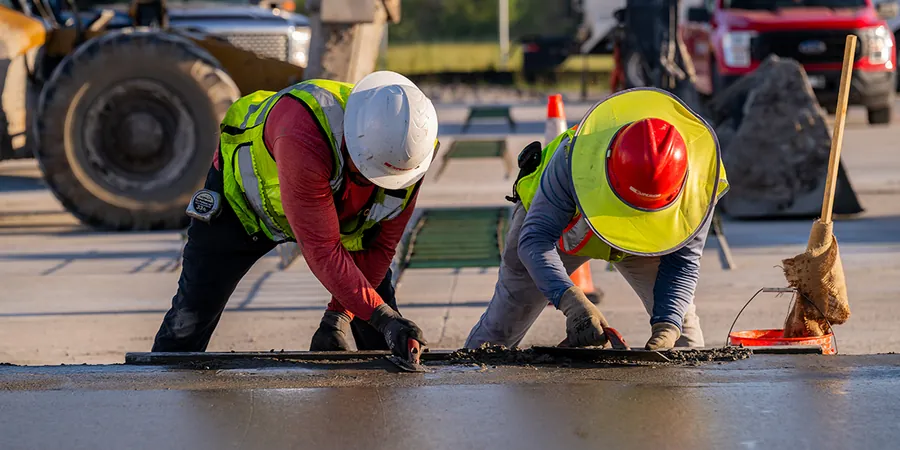
A concrete paving mixer discharging 5,000-psi air-entrained mix onto a laser-graded subbase is the starting point for any rigid pavement design we supervise in Burlington. Our team works directly with batch plant operators to control water-cement ratio during late-fall placements near the QEW corridor, where sudden temperature drops can compromise finishing. The design process begins months earlier with subgrade characterization: we pull Shelby tubes from the Halton Till, run triaxial consolidated-undrained tests to capture effective friction angles, and feed those parameters into PCA thickness charts. A well-designed jointed plain concrete pavement in this climate must handle 40-degree diurnal swings in March, salt exposure from Lake Ontario spray, and occasional heavy-haul loads from the Mapleview Centre redevelopment area.
A rigid pavement in Burlington lives or dies by its subbase drainage and joint detailing—not by concrete strength alone.