In Burlington, laboratory testing is the critical link between field observations and reliable geotechnical design. Our Halton Region lab quantifies the behavior of local glacial till, clay plains, and shale-derived soils under standardized Canadian protocols, primarily CSA and ASTM methods. Accurate classification starts with grain size analysis (sieve + hydrometer), which defines the particle distribution controlling drainage and frost susceptibility. For fine-grained materials prevalent across the Niagara Escarpment and Lake Ontario shoreline, Atterberg limits testing precisely measures the plasticity range and moisture sensitivity that govern long-term volume change.
These index tests form the basis for foundation design, slope stability assessments, and municipal infrastructure across Burlington. Developers rely on our lab data for subdivision approvals, retaining wall design, and excavation dewatering plans in the city’s sensitive clay belts. The resulting parameters feed directly into advanced strength and consolidation programs, ensuring compacted fill specifications meet Ontario Building Code requirements. A rigorous lab program reduces uncertainty in compressible ground and delivers defensible numbers for shoring design and pavement performance.
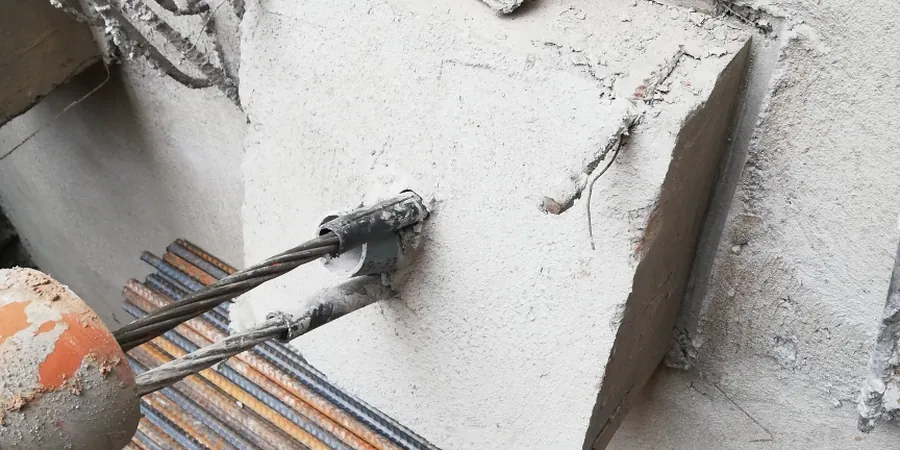
A common mistake on Burlington jobsites is treating the Halton Till and Queenston Shale interface as a uniform anchor bond zone. The shale here weathers rapidly when exposed to air, dropping allowable bond stress from over 400 kPa to less than half that within hours on a hot July day. Contractors who skip staged pull-out tests end up with anchors that creep under service load, and suddenly a straightforward shoring wall needs costly re-drilling. We run sacrificial test anchors early, measure load-displacement curves, and lock in a bond length that holds through wet fall excavations. For deep cuts near the lake, combining the anchor design with a slope stability analysis catches the global failure wedge that single-anchor checks miss.
Anchors in weathered Queenston Shale can lose 60% of bond capacity within 24 hours of drilling if left ungrouted — Burlington's escarpment geology demands immediate grout placement.