In-situ testing in Burlington provides direct evaluation of subsurface conditions without sample disturbance, essential given the region’s glacial till, clay plains, and shale bedrock of the Queenston Formation. These methods align with CSA A23.2 and ASTM standards referenced in the Ontario Building Code, ensuring reliable data for foundation design. On compacted granular fills, the field density test (sand cone method) verifies compliance with project compaction specifications, a critical step before structural loads are applied.
Infrastructure, commercial, and residential developments across Halton Region depend on these tests to validate bearing capacity and identify soft zones during site preparation. For projects involving cohesive soils, pairing field density with laboratory strength analysis confirms design assumptions. Our team integrates results with geotechnical modeling to support earthworks, roadways, and shallow foundation assessments efficiently.
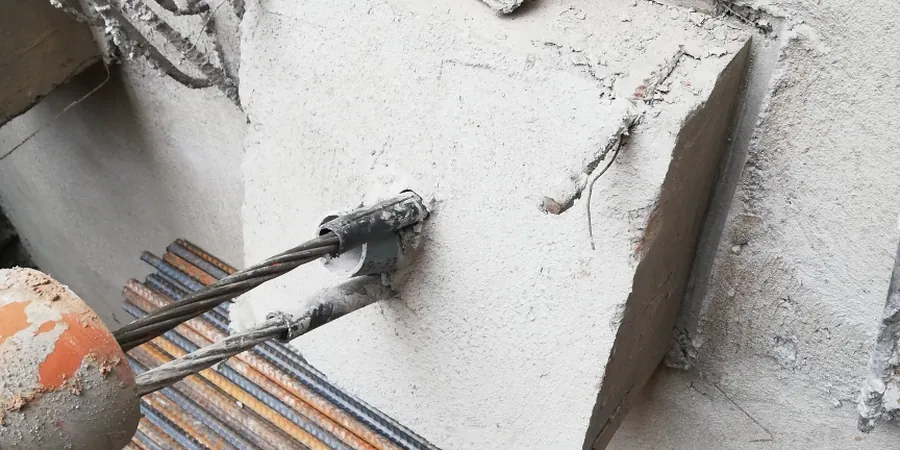
A common mistake on Burlington jobsites is treating the Halton Till and Queenston Shale interface as a uniform anchor bond zone. The shale here weathers rapidly when exposed to air, dropping allowable bond stress from over 400 kPa to less than half that within hours on a hot July day. Contractors who skip staged pull-out tests end up with anchors that creep under service load, and suddenly a straightforward shoring wall needs costly re-drilling. We run sacrificial test anchors early, measure load-displacement curves, and lock in a bond length that holds through wet fall excavations. For deep cuts near the lake, combining the anchor design with a slope stability analysis catches the global failure wedge that single-anchor checks miss.
Anchors in weathered Queenston Shale can lose 60% of bond capacity within 24 hours of drilling if left ungrouted — Burlington's escarpment geology demands immediate grout placement.