GEOTECHNICALENGINEERING
BURLINGTON
HomeLaboratoryTriaxial test

Advanced Triaxial Testing for Geotechnical Design in Burlington, Ontario

Geotechnical engineering with regional judgment.

LEARN MORE

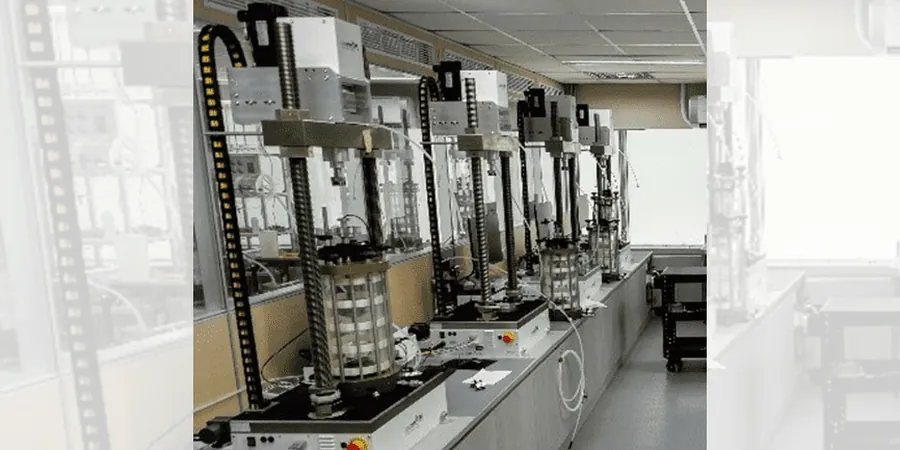
The triaxial test is the definitive laboratory method for determining shear strength and stress-strain behavior of soils under controlled drainage conditions, and in Burlington its application is particularly nuanced. The Halton Region's overburden is dominated by Halton Till—a dense, overconsolidated silty clay till deposited during the Wisconsinan glaciation. ASTM D4767 (Consolidated Undrained with pore pressure measurement) and ASTM D2850 (Unconsolidated Undrained) form the backbone of our testing protocols, but interpreting results requires understanding how this stiff, fissured till responds to unloading during excavation around Lake Ontario's shoreline. The effective stress parameters we derive feed directly into deep foundation design, slope stability analyses, and the assessment of excavations for the city's expanding residential subdivisions north of Dundas Street.

Strain-softening in Burlington's glaciolacustrine silt seams demands peak strength parameters be reduced by 10-15% for excavation support design.
Our service areas

Methodology and scope

A recent project near the Burlington escarpment illustrates why standardized triaxial protocols alone are insufficient. A 10-story mixed-use building was proposed on a site where the Halton Till transitions into glaciolacustrine clay layers—a common scenario where the Iroquois Plain meets the Niagara Escarpment. The design team needed both drained strength parameters for long-term slope stability and undrained parameters for immediate excavation support loading. We performed a staged slope stability analysis using CU triaxial results to model effective stress paths under temporary cut conditions, while also quantifying the undrained shear strength ratio (Su/σ'v) for the soft clay seams. For the foundation elements, the triaxial data informed a numerical model that verified the lateral capacity of the proposed deep excavations support system. The critical insight from this series was the strain-softening behavior observed in the silt seams, which required a reduction factor on the peak friction angle to avoid unconservative wall designs.
Advanced Triaxial Testing for Geotechnical Design in Burlington, Ontario
Technical reference — Burlington

Local considerations

Seasonal groundwater fluctuation along the Lake Ontario shoreline introduces a risk that generic triaxial programs overlook. Burlington's spring melt and fall storm seasons can raise the local water table by over 1.5 meters, fully saturating the upper till and creating transient seepage pressures behind retaining structures. When triaxial specimens are tested at moisture contents from summer drilling campaigns, the effective cohesion intercept (c') can be overestimated by 15 to 20% compared to spring conditions. Our laboratory protocol addresses this by saturating all CU specimens to a Skempton B-value of at least 0.95, regardless of the in-situ moisture content at the time of sampling. This conservative approach aligns with the recommendations in the Canadian Foundation Engineering Manual and ensures that the retaining walls designed from our parameters maintain adequate safety factors against sliding during the critical wet months. For projects on the escarpment face, we also increase the confining stress range to capture the strength envelope beyond typical foundation depths.

Need a geotechnical assessment?

Reply within 24h.

Email: contact@geotechnicalengineering.co

Applicable standards

ASTM D4767-11: Standard Test Method for Consolidated Undrained Triaxial Compression Test for Cohesive Soils, ASTM D2850-15: Standard Test Method for Unconsolidated-Undrained Triaxial Compression Test on Cohesive Soils, ASTM D7181-20: Method for Consolidated Drained Triaxial Compression Test for Soils, Canadian Foundation Engineering Manual, 4th Edition (CFEM), CSA A23.3: Design of Concrete Structures (Annex for geotechnical input)

Technical parameters

ParameterTypical value
Specimen diameter35 to 100 mm (typically 50 mm)
Confining pressure range50 to 800 kPa, staged to match in-situ stress
Back pressure saturation (Skempton B)B ≥ 0.95 for CU tests
Axial strain rate (CU)0.5 to 2% per hour, based on t100 from consolidation
Failure criterionMaximum deviator stress or 15% axial strain
Pore pressure measurementMid-height electronic transducer, 0.1 kPa resolution
Membrane correctionApplied per ASTM D4767 Section 9
Specimen height-to-diameter ratio2.0 to 2.5

Frequently asked questions

What is the typical turnaround time for a triaxial test program in Burlington?

A standard CU triaxial suite with three confining pressures on a single soil unit typically requires 10 to 14 business days from specimen extrusion to reporting. This includes time for saturation, consolidation, and shearing stages. Programs requiring CD testing will extend the timeline due to the slow drained shear phase.

How much does a triaxial testing program cost for a Burlington residential or commercial project?

A complete program including three CU triaxial tests with back pressure saturation, consolidation, and detailed reporting typically ranges from CA$2,790 to CA$3,180, depending on the number of specimens and whether drained (CD) stages are also required. This includes specimen trimming, saturation verification, multi-stage shearing, and a comprehensive parameter report.

Why is back pressure saturation so critical for Burlington's stiff tills?

Burlington's Halton Till is dense and overconsolidated, with a natural moisture content well below full saturation. If tested without back pressure saturation, the effective stress parameters will be unconservative. We saturate to a Skempton B-value of at least 0.95 to ensure the measured pore pressure response during shear is reliable, yielding c' and φ' values that are representative of the soil in a fully saturated in-service condition.

Location and service area

We serve projects across Burlington and its metropolitan area.

View larger map