GEOTECHNICALENGINEERING
BURLINGTON
HomeLaboratoryProctor test (Standard or Modified)

Proctor Testing in Burlington – Standard & Modified Compaction

Geotechnical engineering with regional judgment.

LEARN MORE

Burlington sits between the Niagara Escarpment and Lake Ontario, and that means two things for anyone moving dirt here: clay-rich glacial till on the high side, and variable fill near the lake plain. Getting compaction right isn't optional. It's the difference between a stable building pad and a floor slab that cracks after two freeze-thaw cycles. We run both Standard and Modified Proctor tests to match the spec your geotechnical engineer actually wrote, using ASTM D698 and D1557 procedures. The lab sits less than an hour from most Burlington job sites, so sample turnaround keeps your earthworks schedule moving without waiting a week for results. When the subgrade under a new warehouse off Harvester Road needs a density check, we're the lab that contractors call because the report comes back in plain English with the numbers that matter: maximum dry density and optimum moisture content.

A Proctor curve is the cheapest insurance policy you'll ever buy for a building pad.
Our service areas

Methodology and scope

Burlington's population has pushed past 185,000, and the construction pace along Fairview Street and the Alton Village expansion keeps compaction testing in steady demand. A proper Proctor curve isn't just lab busywork. It gives your crew a target density to hit with the roller, and it tells the inspector exactly what percentage of the standard you've achieved. The test compacts soil in a mold at several moisture contents, and the peak of the resulting curve defines the benchmark. We see a lot of silty clay from the Halton Till formation on local jobs, which can be sensitive to over-compaction. Pound it too much above optimum and you actually lose density. That's why we pair the Proctor with a sand cone density test in the field, so the field technician has the right reference to compare against. For granular materials under parking lots or road subbases, we often run the Modified Proctor at 56,000 ft-lbf/ft³ to match Ontario Provincial Standard Specifications. The lab maintains ISO 17025 accreditation for these methods, so the numbers stand up to municipal review in Burlington and across Halton Region.
Proctor Testing in Burlington – Standard & Modified Compaction
Technical reference — Burlington

Local considerations

The mistake we see too often on Burlington sites: a contractor grabs a random fill sample, runs a single Proctor point, and assumes the whole site matches. Then the nuclear gauge reads 95% of something that was never the right reference to begin with. Fill sources change. A borrow pit off Appleby Line might deliver material with a different optimum moisture than what was used three lifts ago. If the Proctor curve doesn't represent the actual fill being placed, every field density test is meaningless. The inspector signs off, the asphalt goes down, and two springs later the curb line is separating from the pavement. We recommend a new Proctor for every 3,000 cubic meters of fill placed, or whenever the material source changes visibly. It's a few hundred dollars against a potential six-figure subgrade failure. For deep fill sites near Bronte Creek, we also suggest combining compaction testing with slope stability analysis if the fill is part of a raised grade platform.

Need a geotechnical assessment?

Reply within 24h.

Email: contact@geotechnicalengineering.co

Applicable standards

ASTM D698-12 (Standard Proctor), ASTM D1557-12 (Modified Proctor), OPSS 501 (Ontario compaction spec), ASTM D2216 (moisture content)

Technical parameters

ParameterTypical value
Standard Proctor compactive effort12,400 ft-lbf/ft³ (600 kN-m/m³)
Modified Proctor compactive effort56,000 ft-lbf/ft³ (2,700 kN-m/m³)
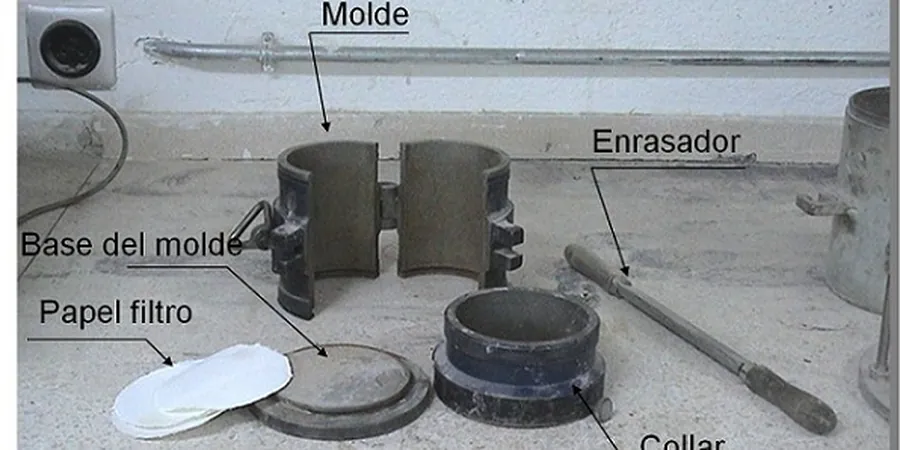
Mold volume1/30 ft³ (944 cm³) – 4-inch mold
Hammer mass (Standard)5.5 lb (2.5 kg) – 12-inch drop
Hammer mass (Modified)10 lb (4.54 kg) – 18-inch drop
Applicable standardASTM D698-12 & ASTM D1557-12
Typical optimum moisture range8% to 18% for Halton Till clays

Frequently asked questions

What's the difference between Standard and Modified Proctor?

The compactive effort. Standard Proctor uses a 5.5 lb hammer dropped 12 inches, producing 12,400 ft-lbf/ft³. Modified Proctor uses a 10 lb hammer dropped 18 inches, producing 56,000 ft-lbf/ft³. Most structural fill in Burlington follows Standard Proctor unless the geotechnical report specifies Modified for heavy traffic loading or deep fill applications.

How much does a Proctor test cost in Burlington?

A standard Proctor test typically runs between CA$130 and CA$280 depending on whether you need Standard or Modified, and how many points are required to define the curve. Volume pricing applies for projects needing multiple Proctors across different fill sources.

How long does the lab take to deliver results?

A single-point Proctor can be completed same-day if the sample arrives before noon. A full four-point or five-point curve to establish the compaction curve properly takes one to two business days. We email the PDF report as soon as the data is verified.

How many Proctor tests does my Burlington project need?

The Ontario Building Code doesn't prescribe an exact number, but industry practice in Halton Region is one Proctor per distinct fill source, plus a new one for every 2,500 to 3,000 cubic meters of fill placed. If the material changes visually or the moisture sensitivity looks different, run another test.

Location and service area

We serve projects across Burlington and its metropolitan area.

View larger map