GEOTECHNICALENGINEERING
BURLINGTON
HomeFoundationsShallow foundation design

Shallow Foundation Design in Burlington: Soil-Specific Bearing Solutions

Geotechnical engineering with regional judgment.

LEARN MORE

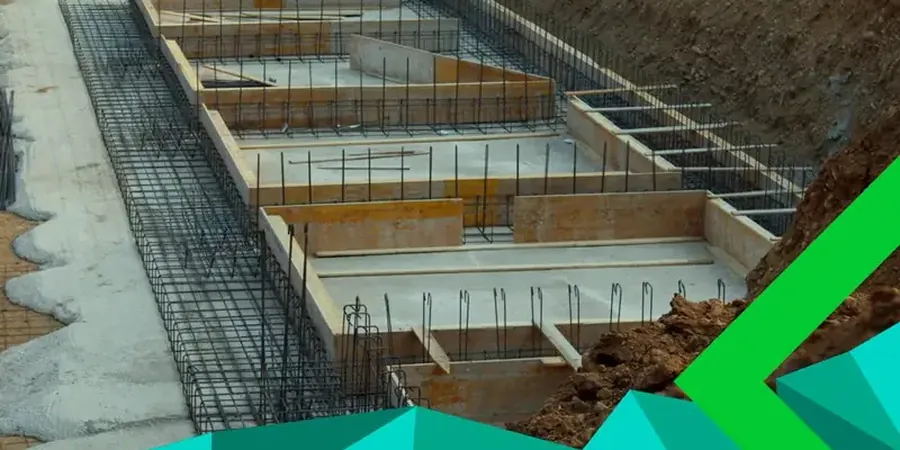
From the silty clays near the Aldershot GO station to the stiffer till deposits closer to the Brant Street escarpment, Burlington's subsurface tells a story of glacial Lake Iroquois and post-glacial drainage. Designing shallow foundations here means reading that story carefully: a strip footing that performs well on the sandy plains of the Orchard might require significant widening in the compressible lowlands near Lake Ontario. Our team has spent years correlating site-specific soil behavior across Halton Region, integrating shear strength data from triaxial tests with index properties like Atterberg limits to match foundation geometry with the actual ground conditions. In neighborhoods like Roseland, where mature trees and clay-rich soils coexist, seasonal moisture fluctuations demand a design approach that goes beyond textbook bearing capacity and considers the full soil-structure interaction.

A shallow foundation in Burlington's Halton Till typically delivers allowable bearing pressures between 150 and 250 kPa, but the final number depends entirely on settlement tolerance and groundwater control.
Our service areas

Methodology and scope

Much of Burlington sits on the Halton Till plain, a dense, silty-clay matrix with a characteristic grey-brown mottling that forms a reliable bearing stratum at depths of 1.5 to 4 meters. Below this, the Queenston Shale bedrock slopes gently toward the lake, and in areas like Tyandaga, the overburden thins to less than a meter, making depth-to-rock a critical parameter for footing design. We routinely verify the till's in-place density with sand cone tests before calculating allowable bearing pressures under the limit states framework of the National Building Code of Canada. In the lower-lying sectors north of the QEW, groundwater is often encountered within 2 meters of grade, so our shallow foundation design includes rigorous checks for buoyancy, seepage, and long-term settlement. The design process blends classical Terzaghi bearing capacity theory with local empirical corrections derived from hundreds of plate load tests conducted across the Greater Toronto and Hamilton Area: this ensures that factors of safety reflect regional performance, not just generic textbook assumptions.
Shallow Foundation Design in Burlington: Soil-Specific Bearing Solutions
Technical reference — Burlington

Local considerations

Burlington sits at just 74 meters above Lake Ontario, and its gently sloping topography masks a real challenge: differential settlement between the dense Halton Till and the softer, water-laden silts that fill ancient stream channels. In a 2021 residential project near LaSalle Park, a footing placed across two distinct soil units settled unevenly within the first year, cracking the slab-on-grade. That's a classic Burlington scenario. The city's frost penetration depth of 1.2 meters, coupled with a groundwater table that fluctuates seasonally by up to 1 meter, means that a footing designed without a proper frost-and-drainage strategy is at risk from day one. We use SPT-derived settlement analysis and detailed grain-size distributions to predict where the compressible lenses hide, because in a city of 180,000 people growing steadily upward and outward, every shallow foundation must be a long-term asset, not a future underpinning headache.

Need a geotechnical assessment?

Reply within 24h.

Email: contact@geotechnicalengineering.co

Applicable standards

NBCC 2020 (National Building Code of Canada), CSA A23.3:2019 (Design of Concrete Structures), ASTM D1194/D1194M (Plate Load Test — historical reference), Canadian Foundation Engineering Manual, 4th Ed.

Technical parameters

ParameterTypical value
Typical bearing stratumHalton Till / Queenston Shale bedrock
Allowable bearing pressure range150–250 kPa (Settlement-limited)
Depth to groundwater (north of QEW)0.8–2.5 m below grade
Seismic site class (per NBCC 2020)Class C (dense soil) to Class B (rock)
Design standardNBCC 2020 Part 4, CSA A23.3:2019
Settlement threshold (footings)25 mm total / 20 mm differential
Typical footing embedment depth1.2–1.8 m (frost protection)

Frequently asked questions

What is the typical allowable bearing pressure for a shallow foundation in Burlington?

On undisturbed Halton Till, we typically recommend allowable bearing pressures between 150 kPa and 250 kPa for strip and pad footings, assuming a minimum embedment of 1.5 meters. The final design value depends on settlement sensitivity of the structure, proximity to the escarpment, and groundwater conditions. A site-specific investigation is essential to confirm these numbers.

How much does a shallow foundation design package cost for a Burlington residential project?

A complete geotechnical design package for a typical Burlington single-family home, including a borehole investigation, laboratory testing, and stamped foundation drawings, generally falls between CA$2,730 and CA$4,920, depending on the number of boreholes and the complexity of the soil profile.

Does Burlington's proximity to Lake Ontario affect shallow foundation design?

Yes, significantly. The high groundwater table in areas near the lake, especially north of the QEW, can reduce effective stress and bearing capacity. Our designs always include drainage recommendations and, where necessary, buoyancy checks for basements and mat foundations to prevent hydrostatic uplift.

What depth must a shallow foundation be to avoid frost heave in Burlington?

Per the Ontario Building Code, foundations must extend at least 1.2 meters below finished grade to reach below the frost line in Burlington. For unheated structures or FPSF systems, we adjust the insulation layout and depth accordingly.

Can a shallow foundation be used on the Queenston Shale in Tyandaga?

Absolutely. Where the overburden is thin and competent shale is encountered at shallow depth, we design footings to bear directly on the rock after removing any weathered or fractured upper zone. Rock socketing is not typically required for residential loads, but we confirm rock quality with core recovery data.

Location and service area

We serve projects across Burlington and its metropolitan area.

View larger map